
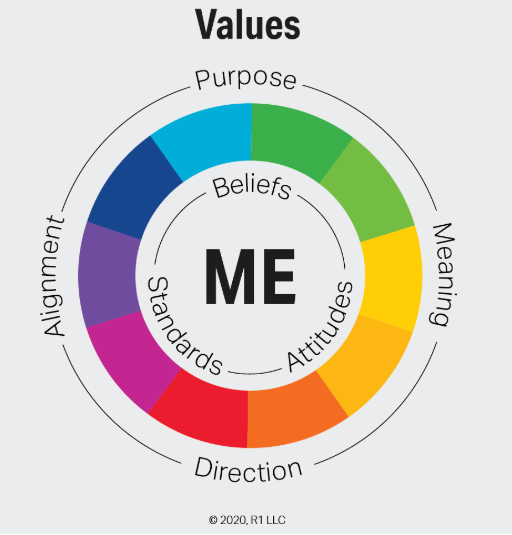
If you have not read my post on the creation of my philosophy of leadership, please read it first. It includes my 7 core values in 1999. These additional 28 values were also identified and defined at that time. My current core values can be found here.
These are all still values I highly value today, 25 years later. I realize it is difficult to remember 28 leadership values (in addition to the 7 core values,) but the process of reviewing hundreds of values and narrowing them down to a top 35, from which my 7 core values were drawn, was extremely helpful to me. I try to review these additional values at least annually for a reminder of what I did, and still do, seek to care about.
28 Additional Leadership Values Important to Jeff
Adventure
I seek to create a challenging work environment that is exciting and rewarding. I want people to feel safe to experiment and take calculated risks. I seek to bring a sense of adventure to the workplace by encouraging and exploring new ideas.
Autonomy
I try to avoid micromanaging. I trust people to follow through on their work. I try to give people the freedom to achieve goals in their own way. I avoid using coercion or manipulation to force change, and give others the choice and freedom to join. I acknowledge that this process takes time. If we do not trust others’ process, they will not trust us. (Lao-Tzu)
Comfort with Ambiguity
As much as possible, I am comfortable dealing with chaos. I seek to make sense of uncertainty, but acknowledge my inability to answer all questions. I accept life’s paradoxes including the following: Justice and Mercy, Individuals and Community, Theory and Practice, Freedom and Responsibility, Short-term and Long-term, Core Values and Continual Change. My goal for leadership in these dilemmas is to integrate the best of both sides and not choose one or the other.
Community
I enjoy gathering regularly with others to build and sustain shared values and have fun. I promote positive traditions and ceremonies that honor outstanding members of the community. Before new people join the community I make an intentional effort to clearly communicate the shared values and beliefs of the community so that new members will be prepared for the culture. If someone (including me) is not living by community values, I hold them accountable.
Conflict Resolution
I welcome conflict and spirited discussions as necessary to understand others and ourselves. However, when under stress, I often need time to consider my emotional state before returning to the conflict. To resolve conflict I: a) Try to state to the other party’s satisfaction my understanding of their position, b) Identify and state as much of their proposition as I can agree with, c) State my own point of view, d) Determine the results on which both of us can agree, e) Identify possible new options to achieve those results.
Courage and Confidence
I stand up for what I believe. I am not afraid to try new things even when they do not feel comfortable. My confidence comes from clarify of belief rooted in my core values. “If the trumpet gives an uncertain sound who shall prepare himself for battle?” (Paul)
Development of People
I insure that people are given ample opportunities for professional development. I want people I lead to know that I have their best interests at heart and that I want them to succeed. I want people to know that there is a purpose for them working here and that they are doing something to make this world a better place to live. I want people to enjoy their jobs and feel good about their effort at the end of each day.
Empowerment
I believe power in the organization can be increased if it is given away to others. People who believe they have the power to lead almost always act on this belief. Empowerment takes time and patience and often involves the need to train and develop people so that their competency can rise to the level of trust in them. Empowerment is the best process for personal development because it gives people the opportunity to learn by doing, to take risks, and to become comfortable with the consequences of their own performance. (DePree)
Encouragement and Celebration
I seek to encourage others’ hearts with praise, thanksgiving, and gifts. I celebrate individual contributions and team accomplishments. I recognize and thank people publicly for their contributions. I try to choose rewards that are valued by those who receive them.
Excellence
I seek excellence in all I do. I do not seek perfection, but seek to do my best. In whatever I invest my time I want to be proud that I have given myself fully to that person or project.
Fairness
I try to treat people equally, without favoritism or prejudice. I use an open and impartial process to gather and to evaluate all information necessary to make decisions. I make sure punishment is consistent and proportional (not too harsh or lenient). I correct mistakes promptly and voluntarily (if I recognize them ;-).
Family and Friends
I recognize that we all have personal commitments and interests outside our careers. I expect everyone to take time off from work and enjoy life outside of the organization. I seek to find a fair balance between my professional and personal life. I welcome and appreciate family involvement in my professional community.
Forgiveness and Learning from Mistakes
I believe many of the important lessons in life are learned as the result of error. Knowing that we all make mistakes, I believe it is more loving to forgive other’s mistakes and learn from them. My goal is a) to seek to avoid error, b) to accept the consequences of error when it comes, c) to learn from it, d) to forgive and not live with guilt.
Generosity
I try to give generously to others. I believe all that I have is a gift that I did not earn and therefore should be easily given away. “It is better to give than to receive.” Jesus
Goal-Oriented
I set achievable goals that will give me specific targets for which to aim. I am not afraid to set big, long-term goals that may seem impossible. I also set goals for the short-term that offer small wins and build confidence. Goals energize me and keep me highly focused. All goals that are set should be consistent with my personal and organizational values and vision.
Fun
I enjoy my work as much as possible. I balance hard work with fun. I try to find ways of making everyone laugh and laughing with others.
Health
I take care of myself so that I can continue to maximize my service. Healthy living includes eating nutritiously, sleeping adequately, and exercising regularly.
History
I respect those who have traveled on the journey of life before me. I seek to learn from their successes and failures. For this reason, I prefer to collect as much relevant information to the problem as possible before making a decision. I regularly ask myself, “What have we lost or added to the historical mission of the organization?”
Humility
I believe that all that I have learned has been due to the contributions of others. Therefore, there is no need for me to have selfish pride in my accomplishments. I give honor and thanks to others when I am successful. “Clothes yourselves with humility toward one another.” (Peter)
Influence
I do not use coercion to force change. I allow others to come to a feeling of rightness about a belief or action on their own. I acknowledge this process takes time.
Listening
I seek first to understand, then be understood. I try to listen with empathy, patience, openness, and sincerity. “Everyone should be slow to speak and quick to listen.” (James)
Model the Way
The leader is servant first. I am committed to setting the example with my actions. I attempt to go first whenever possible and show others that nothing is beneath me – I am a servant to all.
Order
I solve most problems in a very organized and logical manner. I prefer not to be rushed into making important decisions that need to be fully understood. I strive to create internal unity and stability with the organization. “In a well-led organization, the need for structure may be minimal, but it is best to have some structure because even exceptional leaders sometimes falter and an understood structure serves as a ‘safety net.’” (Greenleaf)
Patience
Rarely must I have anything right now. Usually my lack of patience is due to a lack of perspective that could be improved upon while waiting. I believe the research that indicates that children able to delay gratification are more successful in life.
Proactivity
I take initiative and do not wait to be acted upon. I spend my time and energy on things over which I have some influence. I choose to be a positive person because I have the freedom to choose my own attitude.
Reflection
Periods of isolation are as important in my life as are immersions in a crowd. I try to find times to clear my mind and concentrate on the big picture.
Stewardship
I do my part to be a protector and nurturer of the world in which I live. I use resources prudently. I am careful not to waste money or other people’s time. I am actively involved in making my community a better place to live.
Uniqueness
I believe that we each have our own specific mission in life. Our mission is dependent on the gifts or strengths that we have been given. I want people to know that they are using their greatest gifts to meet this world’s greatest needs. “Whatever our uniqueness, we must draw it forth & face it; then make something creative & good out of it.” (Greenleaf)
 Deep Thoughts on Higher Ed and Life